
On this page
If a koma is new to you, start with what a koma is and how the 53-koma octave works. This guide is the reference that follows it: every scale that Makam Ear teaches, counted step by step.
How to read the tables
Each table lists the seven steps of a scale. The first column is the step, “From” and “To” are the notes with the names the app shows, “Komas” is the size of the step and “Running total” is the distance from the first note.
- Ascending only. The tables give the ascending canonical form. Descending variants and the full seyir of a makam are not modelled, and we do not invent them.
- Names regardless of octave. The app shows a note name without its octave, so the Gerdaniye an octave above Rast appears as Rast, and the Muhayyer above Dügâh as Dügâh. We give the high-octave name in brackets, for example Rast (Gerdaniye).
- The theory is a guide. Players and regions tune makams a little differently, and measured performances differ from the theory in small ways.
The eight at a glance
| Makam | Starts on | Steps in komas | Total |
|---|---|---|---|
| Rast | Rast | 9 + 8 + 5 + 9 + 9 + 8 + 5 | 53 |
| Uşşak | Dügâh | 8 + 5 + 9 + 9 + 4 + 9 + 9 | 53 |
| Hüseynî | Dügâh | 8 + 5 + 9 + 9 + 8 + 5 + 9 | 53 |
| Hicâz | Dügâh | 5 + 12 + 5 + 9 + 8 + 5 + 9 | 53 |
| Nihâvend | Rast | 9 + 4 + 9 + 9 + 4 + 9 + 9 | 53 |
| Segâh | Segâh | 5 + 9 + 8 + 9 + 5 + 9 + 8 | 53 |
| Kürdî | Dügâh | 4 + 9 + 9 + 9 + 4 + 9 + 9 | 53 |
| Sabâ | Dügâh | 8 + 5 + 5 + 12 + 5 + 9 + 5 | 49 |
Across the 56 steps of the eight scales, 9 appears 26 times, 5 appears 14 times, 8 appears 9 times, 4 appears 5 times and 12 appears twice. The whole tone of 9 komas is the commonest step, and the 4, 5 and 8 koma steps, and the 12 koma step of Hicâz and Sabâ, are where the makams differ from one another and from a piano scale.
The eight scales
Rast
| Step | From | To | Komas | Running total |
|---|---|---|---|---|
| 1 | Rast | Dügâh | 9 | 9 |
| 2 | Dügâh | Segâh | 8 | 17 |
| 3 | Segâh | Çârgâh | 5 | 22 |
| 4 | Çârgâh | Nevâ | 9 | 31 |
| 5 | Nevâ | Hüseynî | 9 | 40 |
| 6 | Hüseynî | Eviç | 8 | 48 |
| 7 | Eviç | Rast (Gerdaniye) | 5 | 53 |
Rast starts on Rast and reaches Nevâ after 31 komas, a fifth, with 9 + 8 + 5 + 9. The 22 komas above Nevâ repeat the pattern 9 + 8 + 5, so the same three-step shape appears twice. Wikipedia describes Rast as a pentachord on Rast plus a tetrachord on Nevâ.
Uşşak
| Step | From | To | Komas | Running total |
|---|---|---|---|---|
| 1 | Dügâh | Segâh | 8 | 8 |
| 2 | Segâh | Çârgâh | 5 | 13 |
| 3 | Çârgâh | Nevâ | 9 | 22 |
| 4 | Nevâ | Hüseynî | 9 | 31 |
| 5 | Hüseynî | Acem | 4 | 35 |
| 6 | Acem | Rast (Gerdaniye) | 9 | 44 |
| 7 | Rast (Gerdaniye) | Dügâh (Muhayyer) | 9 | 53 |
Uşşak starts on Dügâh. The first three steps, 8 + 5 + 9, cover 22 komas up to Nevâ, and the four steps above Nevâ, 9 + 4 + 9 + 9, cover 31. Wikipedia describes it as a Uşşak tetrachord with a Bûselik pentachord on Nevâ, which is the same split.
Hüseynî
| Step | From | To | Komas | Running total |
|---|---|---|---|---|
| 1 | Dügâh | Segâh | 8 | 8 |
| 2 | Segâh | Çârgâh | 5 | 13 |
| 3 | Çârgâh | Nevâ | 9 | 22 |
| 4 | Nevâ | Hüseynî | 9 | 31 |
| 5 | Hüseynî | Eviç | 8 | 39 |
| 6 | Eviç | Rast (Gerdaniye) | 5 | 44 |
| 7 | Rast (Gerdaniye) | Dügâh (Muhayyer) | 9 | 53 |
Hüseynî also starts on Dügâh and shares the first four steps of Uşşak, 8 + 5 + 9 + 9, so both reach Hüseynî after 31 komas. They part ways above it: Uşşak goes 4 + 9 + 9, Hüseynî goes 8 + 5 + 9. Singing the two back to back is a good test of whether you hear the 4-koma step and the 8-koma step.
Hicâz
| Step | From | To | Komas | Running total |
|---|---|---|---|---|
| 1 | Dügâh | Dik Kürdî | 5 | 5 |
| 2 | Dik Kürdî | Nim Hicâz | 12 | 17 |
| 3 | Nim Hicâz | Nevâ | 5 | 22 |
| 4 | Nevâ | Hüseynî | 9 | 31 |
| 5 | Hüseynî | Eviç | 8 | 39 |
| 6 | Eviç | Rast (Gerdaniye) | 5 | 44 |
| 7 | Rast (Gerdaniye) | Dügâh (Muhayyer) | 9 | 53 |
Hicâz starts on Dügâh and opens with 5 + 12 + 5. The 12-koma step, from Dik Kürdî to Nim Hicâz, is the augmented second (artık ikili, 12 to 13 komas in Wikipedia’s interval list) and the widest step of the eight scales, about 272 cents. After Nevâ the scale runs 9 + 8 + 5 + 9 up to Dügâh (Muhayyer), the same four steps as Hüseynî has above Nevâ.
Nihâvend
| Step | From | To | Komas | Running total |
|---|---|---|---|---|
| 1 | Rast | Dügâh | 9 | 9 |
| 2 | Dügâh | Kürdî | 4 | 13 |
| 3 | Kürdî | Çârgâh | 9 | 22 |
| 4 | Çârgâh | Nevâ | 9 | 31 |
| 5 | Nevâ | Nim Hisâr | 4 | 35 |
| 6 | Nim Hisâr | Acem | 9 | 44 |
| 7 | Acem | Rast (Gerdaniye) | 9 | 53 |
Nihâvend starts on Rast and goes 9 + 4 + 9 + 9 to Nevâ, 31 komas, then 4 + 9 + 9. Wikipedia’s 53 equal temperament article compares Nihavend with the minor scale: in cents the steps are about 204, 91, 204, 204, 91, 204 and 204, against the 200, 100, 200, 200, 100, 200 and 200 of a piano minor scale.
Segâh
| Step | From | To | Komas | Running total |
|---|---|---|---|---|
| 1 | Segâh | Çârgâh | 5 | 5 |
| 2 | Çârgâh | Nevâ | 9 | 14 |
| 3 | Nevâ | Dik Hisâr | 8 | 22 |
| 4 | Dik Hisâr | Eviç | 9 | 31 |
| 5 | Eviç | Rast (Gerdaniye) | 5 | 36 |
| 6 | Rast (Gerdaniye) | Dügâh (Muhayyer) | 9 | 45 |
| 7 | Dügâh (Muhayyer) | Segâh (Tiz Segâh) | 8 | 53 |
Segâh starts on Segâh itself and ends on Segâh (Tiz Segâh), an octave higher. Its steps, 5 + 9 + 8 + 9 + 5 + 9 + 8, contain the 5-koma and 8-koma steps twice each, and the first step is the smaller 5-koma step, about 113 cents, not a whole tone.
Kürdî
| Step | From | To | Komas | Running total |
|---|---|---|---|---|
| 1 | Dügâh | Kürdî | 4 | 4 |
| 2 | Kürdî | Çârgâh | 9 | 13 |
| 3 | Çârgâh | Nevâ | 9 | 22 |
| 4 | Nevâ | Hüseynî | 9 | 31 |
| 5 | Hüseynî | Acem | 4 | 35 |
| 6 | Acem | Rast (Gerdaniye) | 9 | 44 |
| 7 | Rast (Gerdaniye) | Dügâh (Muhayyer) | 9 | 53 |
Kürdî starts on Dügâh and goes 4 + 9 + 9 + 9 + 4 + 9 + 9. Put next to Nihâvend, which goes 9 + 4 + 9 + 9 + 4 + 9 + 9, it has the same steps with the first 4-koma step moved to the front: Kürdî begins with its small step, Nihâvend with a whole tone.
Sabâ
| Step | From | To | Komas | Running total |
|---|---|---|---|---|
| 1 | Dügâh | Segâh | 8 | 8 |
| 2 | Segâh | Çârgâh | 5 | 13 |
| 3 | Çârgâh | Hicâz | 5 | 18 |
| 4 | Hicâz | Dik Hisâr | 12 | 30 |
| 5 | Dik Hisâr | Acem | 5 | 35 |
| 6 | Acem | Rast (Gerdaniye) | 9 | 44 |
| 7 | Rast (Gerdaniye) | Zirgüle | 5 | 49 |
Sabâ starts on Dügâh and, unlike the others, does not close the octave: the scale as shown ends on Zirgüle, 49 komas above its first note. It has the 12-koma step, between Hicâz and Dik Hisâr, and four of its seven steps are 5 komas. The app shows only this ascending form, and a descending form is not shown.
A scale is not a makam
A list of steps is the skeleton of a makam, not the whole of it. Wikipedia’s article on Turkish makam describes the seyir, the route a melody takes, which can ascend, descend or do both. It describes the durak, the tonic on which a piece ends, and the güçlü, the dominant that acts as a temporary resting place. Two makams can share most of a scale and still sound different because their melodies move differently through it.
For the same reason, treat the tables as a way to hear and sing the steps, not as a complete description of how a makam is played. A 2009 study by Gedik and Bozkurt in the Journal of New Music Research, which evaluated Arel theory through a makam classification task, found it works well overall for identifying a makam and could be improved by small modifications that follow pitch values measured in performance.
How to use the tables
- Choose a pair that differs in one place, such as Uşşak and Hüseynî, or Nihâvend and Kürdî.
- Sing or play the shared part, then the part where they part ways, over a steady tonic.
- Say the steps aloud while you sing, for example “eight, five, nine”.
- Check the notes that land on a 4, 5 or 8 koma step against a reference, and repeat the scale in short sessions.
- Ask your teacher where their playing departs from the table, and write that on your own copy.
Frequently asked questions
Which makams are in this guide?
Why does Sabâ add up to 49 komas and not 53?
Why does a high note show the name of a lower one?
Is a makam just a scale?
Products mentioned
Products from the Store that this post mentions.
- Makam EarTune oud, saz, ney and voiceiPhone and iPad: Available · Android: Available
Sources
Related posts
What Is a Koma? The 53-Koma Octave in Turkish Makam
A koma is one of 53 equal steps in the octave, about 22.6 cents, and nine of them make a whole tone. How komas work, what the names mean and how to hear them.
How Many Words for B1? CEFR Word Counts, A1 to B2
No official word count exists for any CEFR level. We counted the CEFR-J list: 1,164 entries at A1 up to 2,778 at B2. See the method, the table and study maths.
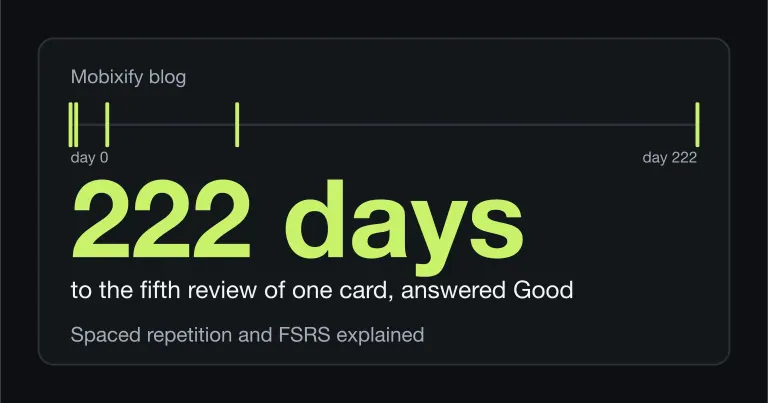
Spaced Repetition Explained: How FSRS Schedules Cards
Spaced repetition shows a card just before you would forget it. Learn how the open FSRS scheduler sets each review, from memory states to desired retention.


